Digital Tape Era
Early tape plugins helped shape the sound of the 2000s. Their algorithms brought a character of their own to digital mixes, a character that today’s more accurate tape models don’t necessarily reproduce.
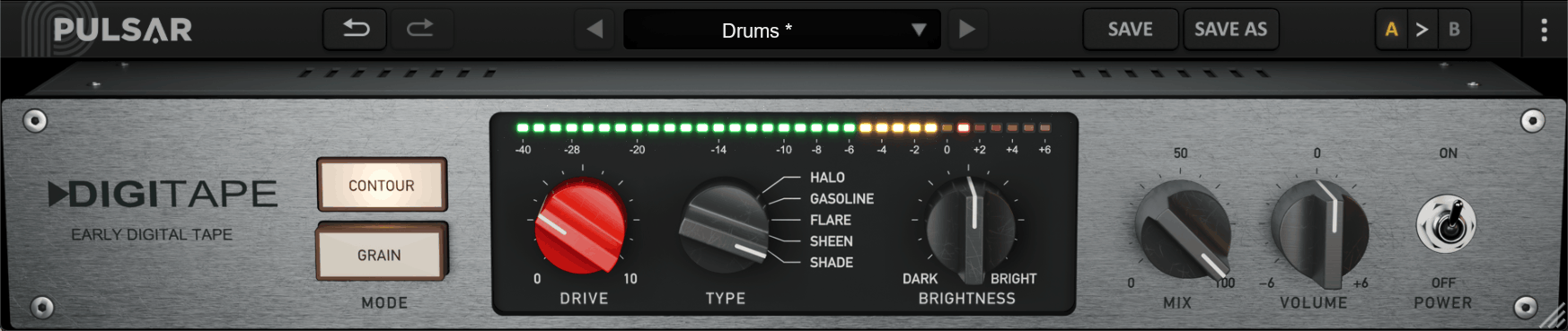
Developed at a time when processing power was limited, these algorithms relied on clever simplifications and the experience of engineers who knew tape inside out. Pulsar PlayHead brings two interpretations of this distinctive digital tape sound into a single free plugin, from subtle saturation and tonal shaping to thick, gritty distortion.
■ Two distinctive early digital tape algorithms in one free plugin
■ Tape saturation, from subtle warmth to gritty distortion
■ Add density, tonal color and character to drums, vocals and mixes
■ Inspired by the digital tape sound of the 2000s
Digital Tape from the 2000s
Early tape plugins helped shape the sound of the 2000s. Their algorithms brought a character of their own to digital mixes, a character that today’s more accurate tape models don’t necessarily reproduce.
Developed at a time when processing power was limited, these algorithms relied on clever simplifications and the experience of engineers who knew tape inside out. Pulsar PlayHead brings two interpretations of this distinctive digital tape sound into a single free plugin, from subtle saturation and tonal shaping to thick, gritty distortion.
■ Two distinctive early digital tape algorithms in one free plugin
■ Tape saturation, from subtle warmth to gritty distortion
■ Add density, tonal color and character to drums, vocals and mixes
■ Inspired by the digital tape sound of the 2000s
Digital Tape Era
Early tape plugins helped shape the sound of the 2000s. Their algorithms brought a character of their own to digital mixes, a character that today’s more accurate tape models don’t necessarily reproduce.
Developed at a time when processing power was limited, these algorithms relied on clever simplifications and the experience of engineers who knew tape inside out. Pulsar PlayHead brings two interpretations of this distinctive digital tape sound into a single free plugin, from subtle saturation and tonal shaping to thick, gritty distortion.
■ Two distinctive early digital tape algorithms in one free plugin
■ Tape saturation, from subtle warmth to gritty distortion
■ Add density, tonal color and character to drums, vocals and mixes
■ Inspired by the digital tape sound of the 2000s
Get DigiTape For Free
Get your license code directly in your mailbox by filling this 4-question survey.
Two Early Digital Tape Algorithms
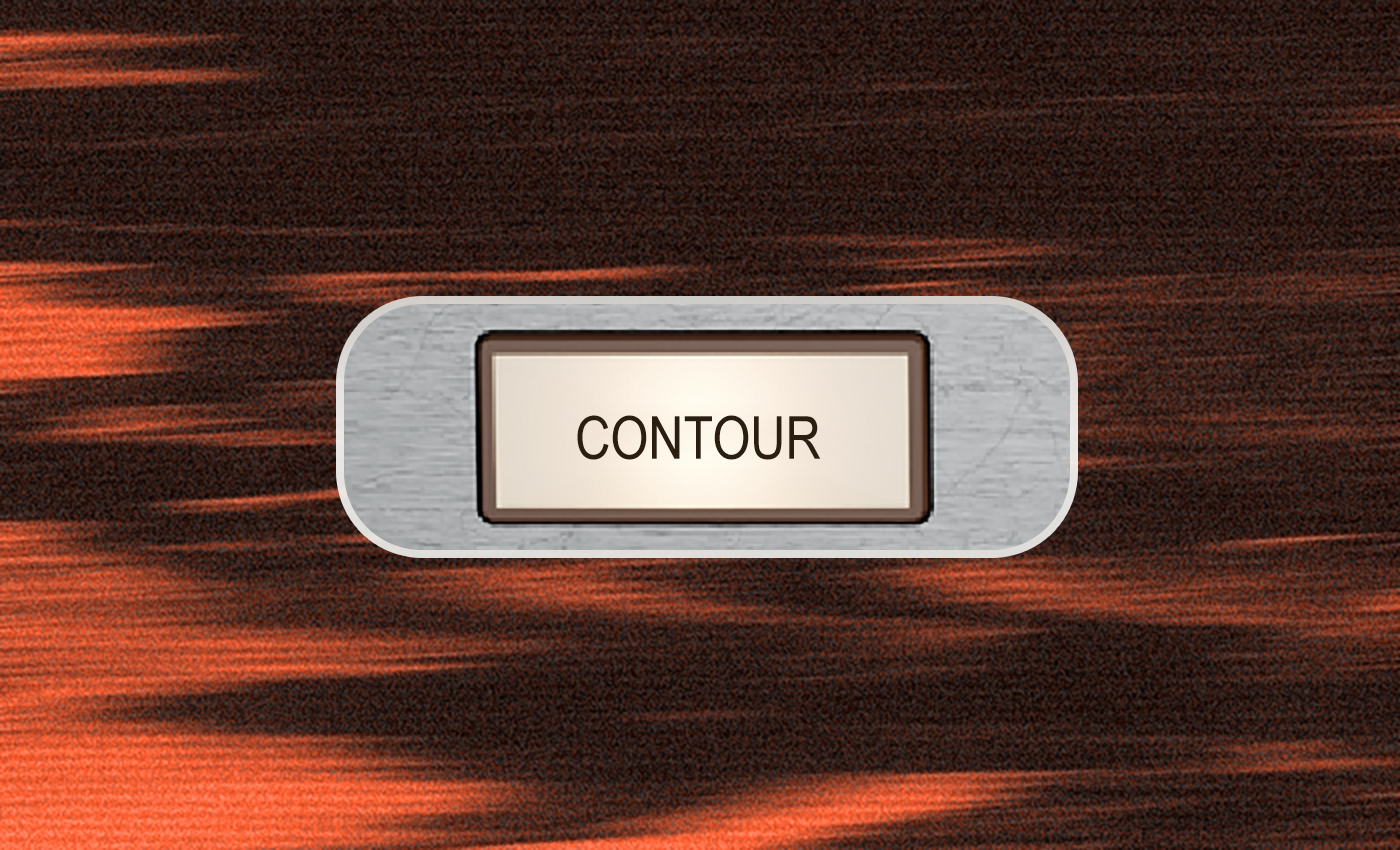
Contour
A refined interpretation of tape, with roots in digital mastering hardware. Saturation, tonal shaping and compression work together to build subtle density and color.
Hard Rock Mix
When Every Calculation Counted
In the early days of digital audio, pro engineers struggled with limited computer power. Even the fastest machines needed expensive DSP cards to do what an entry-level laptop can handle today.
Tape presented a particularly difficult challenge. A detailed simulation could involve the recording electronics, the nonlinear magnetic response of the tape, the playback system and the interactions with an ultrasonic bias signal. Simulating this requires substantial processing power, especially when the aim is to put tape saturation on every track!
The developers who tackled this challenge were true pioneers, combining technical ingenuity with exceptional ears. Among them were recording engineers with decades of experience mixing on tape. They found inventive ways to capture the feel of machines they knew intimately, using their ears and musical judgment to decide what to preserve, what to simplify, and where to spend the precious processing power available. Those decisions gave their algorithms a character of their own.
PlayHead celebrates that approach and the pioneers behind it. Its two modes revisit their ideas, and the distinctive digital sound they created.
Explore the Features
Move your cursor over the dots
to reveal DigiTape features
A Footprint On Pop Culture
Early digital tape algorithms found their way into hit records and marked the sound of an area.
Jay-Z - Bringing guitars and samples together
On “Run This Town,” Young Guru used Massey TapeHead to help the guitars blend with a sample taken from vinyl. Giving those guitars a tape-like character helped the newly recorded parts sit naturally alongside the sampled record. Read Young Guru’s account in Sound On Sound.
OneRepublic - Giving a chorus more body
On “Stop and Stare,” Joe Zook used Crane Song Phoenix Luminescent on Drew Brown’s electric guitar in the chorus. Its contribution was specific and musical: bringing out the guitar’s lower midrange and overtones to give it a fuller sound. Read Joe Zook’s account in Sound On Sound.
Michael Brauer - Making tape character a starting point
For Michael Brauer, Phoenix II became a default choice when tracks hadn’t originally been recorded on tape. His preferred combination of Luster and Sapphire reflects how these early algorithms became familiar colors in a mixer’s palette - settings worth returning to, session after session. Read Michael Brauer’s interview on Gearspace.
Listen In Action
Trance Mix
Hard Rock Mix
Hip Hop Master
Acoustic Guitar
What top producers are saying
“Pulsar Smasher is a rockstar when you need to give energy to tracks and have that classic 1176 all buttons in compression style! Adding this on the drum buss and having a bit of the mix knob in can add so much energy!”
John Nathaniel
Producer | Mixing Engineer | Songwriter
Gwen Stefani | OneRepublic | Switchfoot
“Pulsar smasher is a beast! Loud and rude compression. When you need aggression on drums it’s so cool! I love it on toms mono rooms and creative mics. Very great compression!”
Juan Sebastian Rodriguez
Recording & Mixing Engineer
Mogwaï | Rhye | Zoé
Videos
Get DigiTape for Free
SYSTEM REQUIREMENTS
DOWNLOAD
SYSTEM REQUIREMENTS
CPU
- Intel Core i3 / i5 / i7 / i9 / Xeon or AMD Quad-Core minimum
Memory
- 4 GB RAM
- 1 GB free disk space
Operating System
- Windows 10 64 bit
- Windows 11 64 bit
GPU
- OpengGL 2.0 compatible GPU
Monitor
- Resolution: minimum 1024x768, recommended 1920x1080
- Refresh rate: 60 Hz
CPU
- Intel Core i3 / i5 / i7 / Xeon / Apple Silicon (M1, M2, M3, M4, M5)
Memory
- 4 GB RAM
- 1 GB free disk space
Operating System
- MacOS 10.11 or later
GPU
- OpengGL 2.0 compatible GPU
Monitor
- Resolution: minimum 1024x768, recommended 1920x1080
- Refresh rate: 60 Hz
Compatible plugin formats
AAX Native
64 bits only
Audio Unit
64 bits only
VST 2.4
64 bits only
VST 3
64 bits only
DOWNLOAD
Downloads
Our software is protected with PACE Anti-Piracy, so you will need an iLok account to use it. On Windows, our installers will automatically install the iLok License Manager on your computer. You can find additional information and support on the PACE iLok website.