Comparing IPA 25’s VCA Modes on Real Mix Material
- Posted on

Why Harmonic Profiles Matter in Compression
When we think about VCA compressors, especially ones modeled on RMS-based gain detection, the discussion usually centers on timing, ratio, and knee settings.
But for engineers who already understand compression envelopes, there’s another layer that shapes the end result: the harmonic profile introduced by the gain reduction stage.
In the Pulsar Audio IPA 25, the compression behaviour – ratio, attack, release, knee, detection type – can be held identical while swapping the gain-reduction circuit.
This lets us hear exactly how harmonic distortion changes the sound when everything else stays the same.
What’s especially interesting is how gain reduction and saturation interact:
-
The amount of saturation depends on both input level and gain reduction amount.
-
This produces harmonic distortion that can’t be replicated simply by placing a saturator after a standard compressor.
In feedback mode, it gets even more complex.
Saturation in the VCA stage can feed into the sidechain path, altering what the detector “thinks” the level is.
In some cases, this can subtly change the feedback loop and allow more of the initial attack to pass through – a behaviour you can’t fake with a simple downstream distortion stage.
Why is this important even for an experienced mixer?
Because subtle harmonic differences can:
-
Affect perceived punch and density
-
Influence how elements sit in a mix
-
Interact with downstream EQ, bus compression, and mastering chain choices
In this article, we compare three VCA modes on real-world mix material – a drum bus example and a bass guitar track – each with gain-matched settings so you can focus purely on the sonic fingerprint of each VCA and its harmonics.
The Three VCA Modes - Under the Hood

Original – Hardware VCA Mode
-
Harmonic profile: Minimal added content, near-transparent gain reduction
-
Audible character: Preserves transient snap, keeps low-end tight, leaves midrange uncoloured
-
Best for: Mix bus glue where EQ and saturation are handled elsewhere, or any source where accuracy is the priority
V-Mu – Mu-Inspired Mode
-
Harmonic profile: Subtle even-order saturation; gentle smoothing of transients
-
Audible character: Cohesive low-mid bloom, softened attack on sharp transients, natural “glue” effect
-
Best for: Vocals, strings, pads, or buses where you want cohesion over aggression
N-Diode – Harmonic Edge Mode
-
Harmonic profile: Asymmetrical clipping generating additional odd-order harmonics
-
Audible character: Forward midrange presence, added grit, harmonic edge that helps tracks cut through dense mixes
-
Best for: Rock drums, bass guitar, or any element that needs controlled aggression without separate distortion processors
Seeing Harmonics in Action
Before we listen, let’s see what these modes actually do to a transient.
The captures below show the same snare hit under identical compression settings, with only two variables changing: which VCA circuit is active and how much drive is applied.

Clean VCA (VCA model is OFF): The transient peak is preserved almost exactly as it entered the compressor, with little visible rounding or added harmonic density.
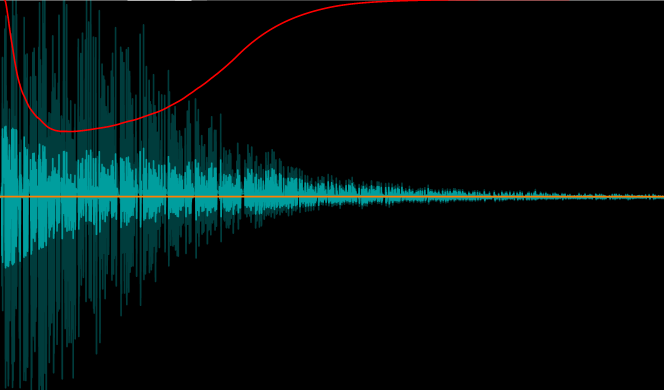
Original hardware model with drive: The RMS-based detection is still controlling dynamics, but the added drive rounds the transient slightly, introducing controlled saturation while keeping low-end stability.
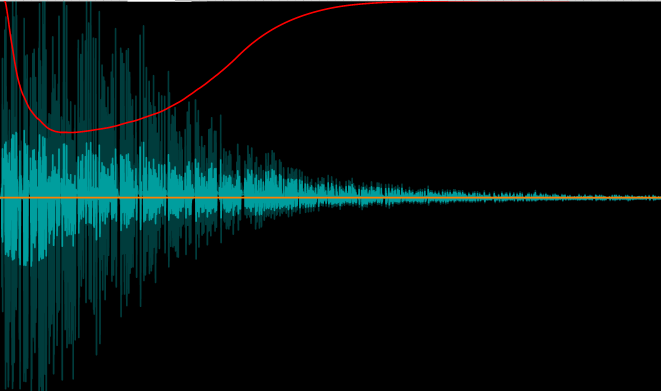
V-Mu with drive: The transient front is smoothed further, even-order harmonics fill in the waveform’s “valleys,” and the overall envelope looks more cohesive – translating to a softer, more blended sound.
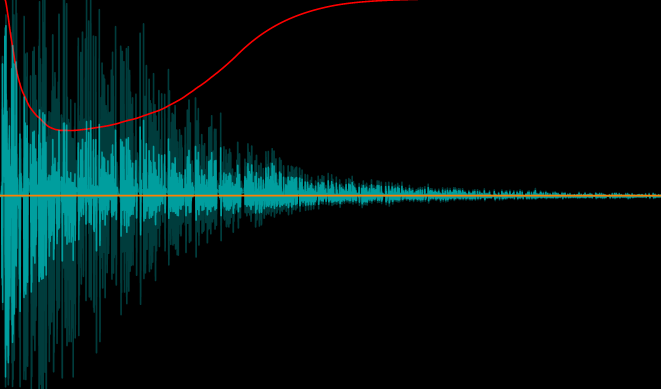
N-Diode with drive: The transient top shows asymmetrical clipping, adding odd-order harmonics and a clear forward push in the waveform’s midrange energy.
These images are not stylised or simulated – they’re taken directly from IPA 25’s output.
They show that harmonic “colour” isn’t just a matter of tone or warmth – it’s a physical change to the transient shape that directly affects how the sound will sit in a mix and interact with later EQ, reverb, and dynamics.
Listening Example – Drum Bus (Rock Kit)
IPA: Maintains clarity of programmed kick transient, high hats stay crisp without smearing
V-Mu: Low-mids fill out, slightly rounds high-end attack on percussive elements
N-Diode: Harmonics in kick bring it forward in busy arrangements, hi-hats gain more audible texture
Listening Example – Bass Guitar
-
IPA: Tight low-end focus, no added harmonic haze in midrange
-
V-Mu: Adds subtle low-mid bloom, smoother note-to-note transitions
-
N-Diode: Introduces harmonic grit, enhancing articulation and presence on smaller playback systems
Practical Takeaways for Engineers
-
Match harmonic profile to mix goal:
-
IPA → Transparent control without extra colour
-
V-Mu → Smooth blend and cohesion
-
N-Diode → Aggressive presence and edge
-
- Consider downstream processing: Harmonic content from compression can change how EQ and reverb respond
- Use gain matching when testing: Loudness bias can hide or exaggerate differences
The fastest way to decide which harmonic profile works best is to hear them back-to-back on your own material.
With IPA 25, you can swap between modes instantly without losing your settings or breaking your mix flow.