Shape Peaks, Keep Dynamics: Using The IPA 25 Intelligent Clipper/Limiter
- Posted on

Most engineers learn early that compressors sculpt envelopes, while clippers and limiters enforce boundaries.
The IPA 25 goes a step further: its limiter isn’t just a hard ceiling, it’s adaptive.
Instead of flattening every peak the same way, the limiter analyzes the incoming material and decides where intervention is needed:
- Low-frequency or sustained tones pass through cleanly, without added harmonics or “fuzzy” bass.
- Transient-rich or bright signals get a touch of controlled saturation, adding density where those harmonics will be naturally masked.
The result isn’t heavy-handed processing.
It’s subtle, program-dependent peak management that lets you push levels, control overs, and still keep the original dynamics intact.
How It Works: The Control-Point Algorithm

Traditional clippers and limiters work by setting a ceiling: anything above is cut or flattened. This keeps signals in range, but it often leaves audible distortion.
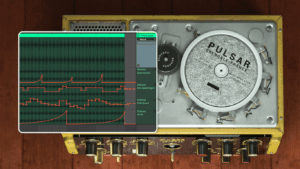
IPA 25 takes a different path. Its limiter uses a control-point algorithm that looks at the waveform’s local peaks and valleys. Instead of pushing everything down, it places tiny, program-dependent “gain moves” only at the points that would overshoot.
In practice:
- Sustained or bass-heavy material stays untouched and transparent, no added harmonics, no loss of weight.
- Transient-rich or bright material gets shaped more assertively, but in a way that’s naturally masked by the existing high-frequency content.
Because the gain reduction resets smoothly, the sound avoids the flat, choked character of conventional limiting.

Clip vs Limit in Practice
Clipping and limiting are related, but they serve different purposes inside a mix.
The Clipper acts instantly – no attack or release, shaving spikes and adding harmonic weight if desired. On transient-heavy material such as drums, picked bass, or percussion, this prevents later compressors from being pulled into unmusical gain reduction.
The Limiter is a fast, high-ratio stop –. It enforces a ceiling after dynamics processing, catching rare overs without becoming part of the tone. When used lightly, it can raise overall level while keeping the envelope intact.
In short:
- Clip to shape peaks or add character.
- Limit to guarantee headroom and preserve dynamics.
Routing and Placement
Where you place the module in the chain changes both its behavior and its role.
IPA 25 supports three routings:
- Pre-Comp – The clipper trims unruly spikes before they hit the compressor. This keeps the compressor working musically on body and groove instead of chasing single hits.
- Pre-Mix – The clipper/limiter sits after the compressor but before the wet/dry blend. This allows you to add peak control or harmonic color to the processed path, while still blending in dry signal if desired.
- Post-Mix – The clipper/limiter works on the combined signal after blending, like inserting a maximizer across a parallel bus. It delivers the benefits of parallel compression but with strict peak control at the summing point.
Each routing corresponds to a different workflow: stabilizing compression, enhancing density, adding coloration, or protecting headroom.
Clip vs Limit in IPA 25 (at a glance)
Outcome | Clipper Role | Limiter Role | Routing Notes |
|---|---|---|---|
Transparent loudness (mix stage) | Pre-trim peaks on tracks/buses; add slight warmth if wanted | Light post-bus safety (≤1 dB), adaptive maximizer for density | Pre Mix on groups / Post Mix on full bus |
Controlled transients | Shave spikes pre-comp on drums/percussion | Catcher for rare overs; adapts to HF content | Pre Comp for clipper; Pre or Post Mix for limiter |
Preserve dynamics | Use soft/hard clip sparingly; don’t flatten tails | Minimal GR only; transparent on LF | Pre Comp clipping, Pre Mix limiting |
Creative coloration / parallel | Drive a parallel path 3–6 dB; blend under main | Usually none | Pre Mix for color; Post Mix for strict parallel ceiling |
Master readiness / delivery | Optional gentle pre-clip before final limiter | Final ceiling via dedicated TP limiter post-IPA 25 | Post Mix (safety) before mastering chain |
Outcome-Focused Examples
Mix buss — invisible guard. After bus compression, let the limiter tap real peaks by ≤1 dB with a conservative ceiling. Headroom stays predictable before mastering.
Parallel drums — controlled aggression. Drive the parallel hard (3–6 dB of clip) and blend under the clean bus. You get size and excitement while preserving the main transient path.
Snare insert — transient pop, thicker body. Shape envelope first, then clip 1–3 dB post-comp to rein in rimshots and add body. If the crack dulls, you’ve gone too far.
Interaction with Compression
Compression doesn’t need to catch every transient to sound great. In fact, forcing a compressor to grab every spike often leads to pumping, smeared attacks, or collapsed dynamics.
That’s where the clipper and limiter step in: they handle peaks that slip through, letting the compressor focus on shaping tone and movement.
IPA 25’s compressor offers both Lookbehind and Lookahead timing tools, which interact naturally with the clipper/limiter:
- Lookbehind
Lets the first transient through untouched, so the compressor works on the sustain. Placing the clipper after this stage adds weight and keeps spikes in check without blunting the attack. - Lookahead
Allows the compressor to anticipate and soften peaks before they hit. In this case, the limiter belongs at the end of the chain, acting as a transparent safety, catching rare overs without reshaping the material.
This interaction makes the workflow more predictable: compression shapes the envelope, the clipper adds tone or trims spikes, and the limiter enforces a clean ceiling.
What “Good” Sounds Like
A well-balanced mix should hit the expected loudness for its style while keeping its musical cues intact:
- Snare cracks stay sharp.
- Cymbals don’t turn sandy.
- Vocal esses remain smooth.
- Low end stays weighty without fuzz or blur.
When compression breathes, the mix shouldn’t pump.
When the arrangement gets dense, detail should still translate, especially on earbuds or small speakers.
This is exactly where the IPA 25 stands out: the limiter increases density where the signal can mask it, yet stays transparent where it can’t.
The result is more level and stability, without the artifacts of conventional “brickwall” limiting.
Try It In Your Own Sessions
The clearest way to understand IPA 25 isn’t through specs – it’s by hearing it in context. Drop it on a drum bus, shave a decibel with the clipper, and notice how the compressor breathes more musically. Or place the limiter last on a vocal chain and hear how it adds consistency without flattening detail.
These are small, fast moves that add up quickly: more level, more stability, and fewer artifacts. Subtle adjustments are often all it takes to hear the difference.
Try the clipper/limiter on your own tracks today, and you’ll see – the results speak for themselves.
![[IPA 25] How We Matched the Original Hardware - Without Burning Your CPU](https://pulsar.audio/wp-content/uploads/2025/09/Thumbnail-IPA25-Video-2-150x150.jpg)